



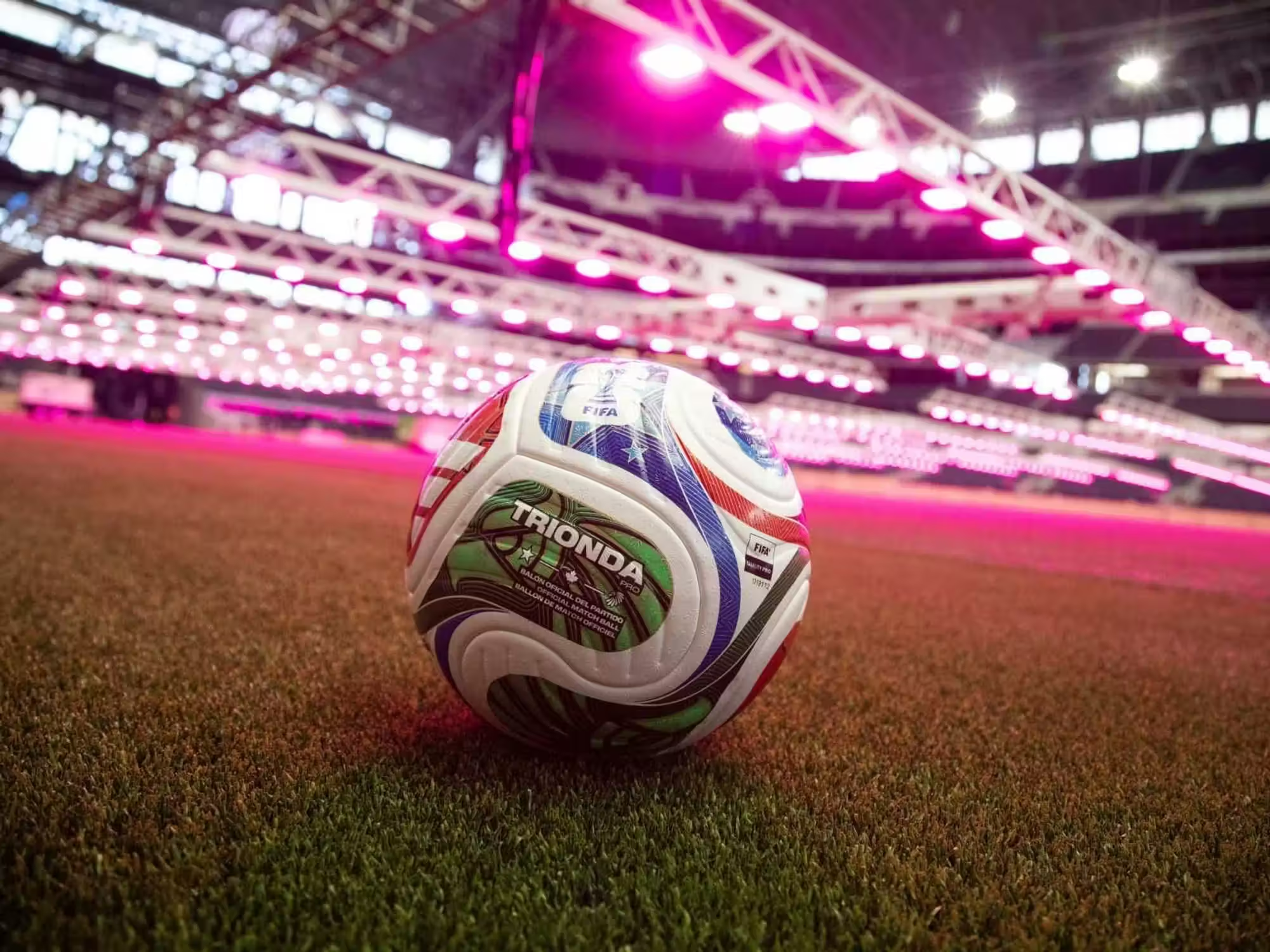
As cameras focus on Dallas Stadium’s iconic pink grow lights and record-setting FIFA pitch, our Director of Agronomy is helping manage one of the most technically advanced playing surfaces in international sports.
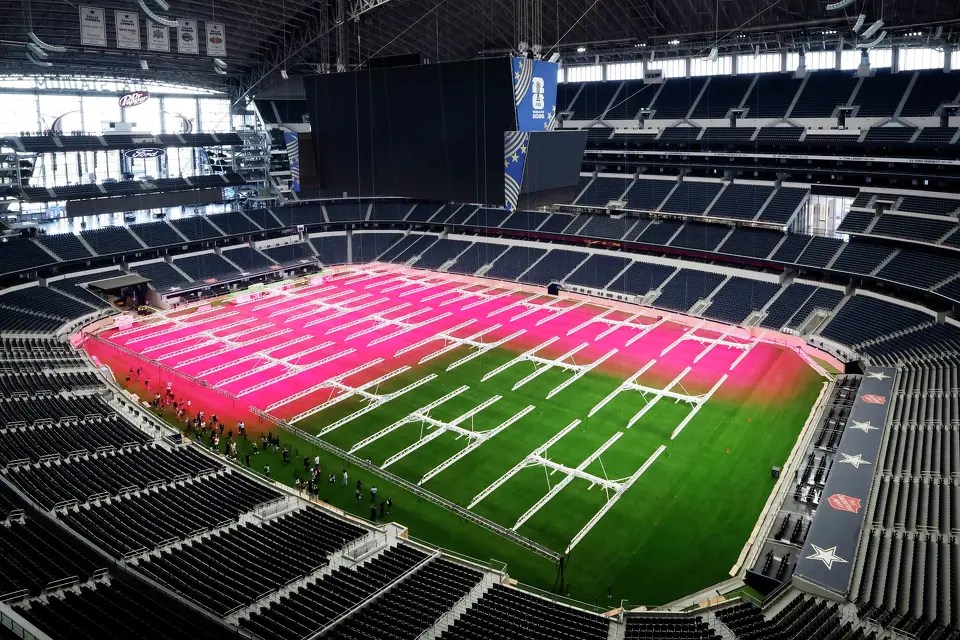
By now, you’ve probably seen the photos: a lush green soccer pitch glowing pink inside AT&T Stadium, suspended grow lights hanging from the ceiling like something out of a sci-fi film. The venue, temporarily renamed “Dallas Stadium” for the 2026 FIFA World Cup, has captured the imagination of soccer fans and sports industry watchers alike.
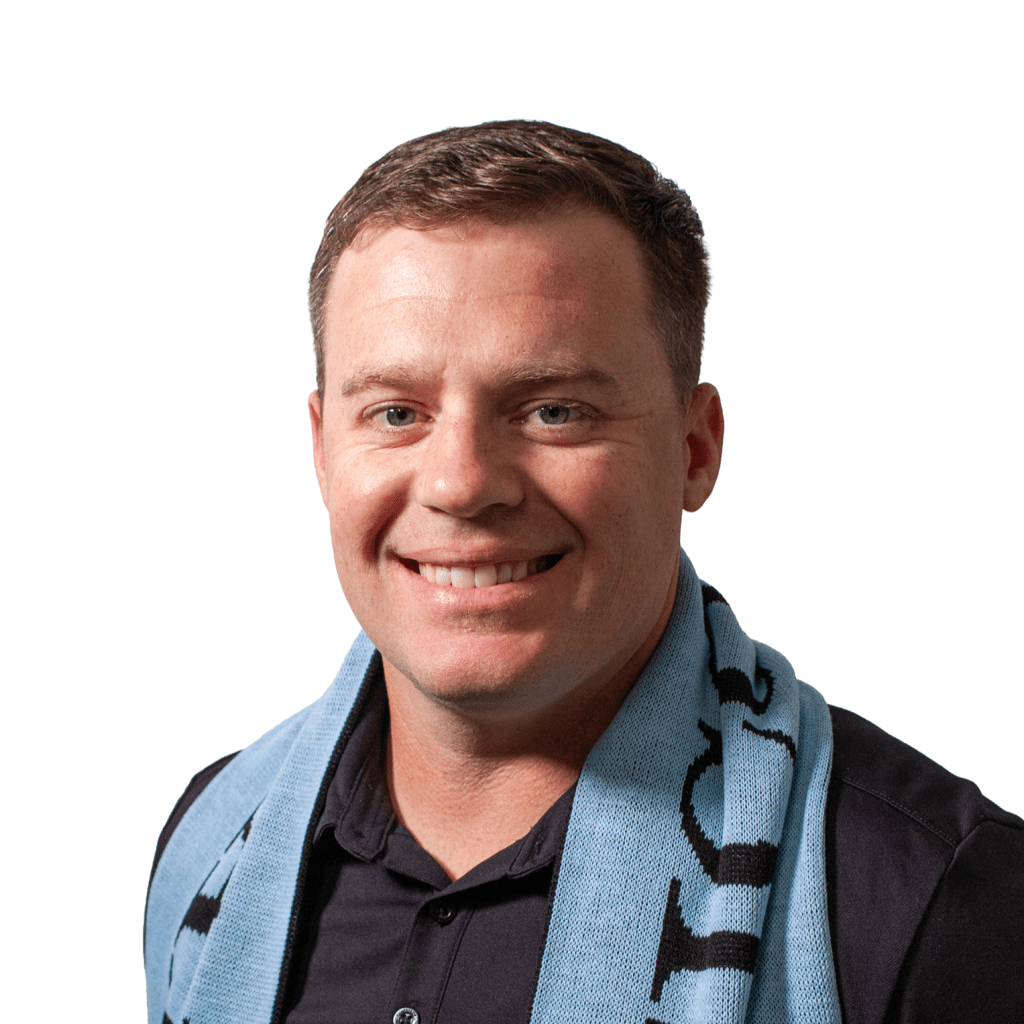
What most people don’t know is that among the small team working every day to keep that living surface alive is one of our own: Zac Taylor, Director of Agronomy for Atlético Dallas.
Taylor is one of only a handful of DFW-area professionals involved in matchday and match day-minus-one operations at the venue. Dallas Stadium will host nine World Cup matches, more than any other city in the tournament. He was brought in by Precision Turf, an Atlanta-based specialist he has worked alongside since 2018, when a natural grass surface was first installed at AT&T Stadium for a MexTour match.
“I almost talked myself out of pursuing it,” Taylor admits. “I already had a lot on my plate with multiple facilities coming online at Atlético Dallas. Fortunately, our leadership team was incredibly encouraging and supportive, and having that backing made a huge difference.”
A Field Unlike Any Other
The pitch itself is a feat of engineering. A Kentucky bluegrass and ryegrass blend was grown on a farm in Colorado, harvested at roughly 1.5 inches, and transported roughly 800 miles to Arlington in 24 climate-controlled trucks over an 18-hour journey. Once inside the stadium, it was laid over a system of drainage, sand, and a SubAir ventilation network, sitting about two feet above the original concrete floor.
Because AT&T Stadium’s retractable roof blocks natural sunlight, the field relies on an array of pink LED grow lights manufactured by SGL and suspended from 18 ceiling rigs. It’s a setup FIFA has never used before at any World Cup venue anywhere in the world.
Taylor describes the combination of technologies as creating “a controlled microclimate inside the stadium.” The lights stimulate photosynthesis above the surface while the SubAir system manages oxygen, temperature, and moisture below it, together forming what he calls the “heartbeat” of the field.
Three specialized stitching machines are currently working around the clock in rotating crews, weaving nylon fibers into the turf to reinforce the surface for the rigors of nine elite matches. One machine was brought in from Iowa; the other two were shipped from Estadio Azteca. The process alone takes approximately four days to complete.
The Masters of Sports Turf
When asked to put the project in context, Taylor doesn’t hesitate:
“To me, this is the equivalent of what The Masters is to the golf industry. It represents the highest level of preparation, presentation, precision, and expectation within sports turf management.”
His day-to-day role during the grow-in phase involves monitoring turf health and moisture, coordinating around multiple simultaneous crews, and making agronomic decisions alongside FIFA’s appointed Site Venue Pitch Manager and Precision Turf leadership. Every call is data-driven: surface firmness measured by Clegg Hammer, ball bounce consistency tracked, recovery rates logged after each session.
“You’re not just maintaining grass,” Taylor says. “You’re managing an entire living system. Every layer underneath the field plays a role in creating a surface that is safe, stable, and capable of performing at the highest level.”
What It Means for Atlético Dallas
Taylor currently oversees 19 soccer fields at Dallas Soccer Park (formerly MoneyGram Soccer Park), a 120-acre city park that Atlético Dallas manages and where the club’s team will train throughout their 2027 inaugural season. [Read more about Dallas Soccer Park and the name change here]. His work there will eventually extend to Cotton Bowl Stadium when the club kicks off its inaugural season in Spring 2027, and to nearly 40 fields across multiple DFW facilities as the organization grows.
He’s already applying World Cup-level thinking at Dallas Soccer Park, where his team uses drone technology to capture NDVI imagery, detailed health maps of the turf that allow for targeted, precision treatments rather than broad applications across every field.
“Being around a World Cup-level operation only reinforces how important that approach is moving forward,” he says. “The more information you have about how the surface is responding, the better decisions you can make for both performance and player safety.”
When the opening whistle blows at Dallas Stadium on June 14, Netherlands vs. Japan, the first of nine World Cup matches on the pitch he has helped nurture, Taylor says he’ll feel something quieter than triumph.
“Honestly, I think it will just be a quiet sense of appreciation for being part of it,” he says. “Most of the work happens well before anyone is in the stadium or watching on TV. Seeing players step onto the surface and compete is a good reminder of why the attention to detail matters.”
